Design
Shaker vs. Flat-Panel Cabinets: Which Style Fits Your Home?
Two doors, two philosophies. A cabinetmaker's comparison of shaker and flat-panel cabinetry — construction, character, cost, and which one belongs in which kind of California home.
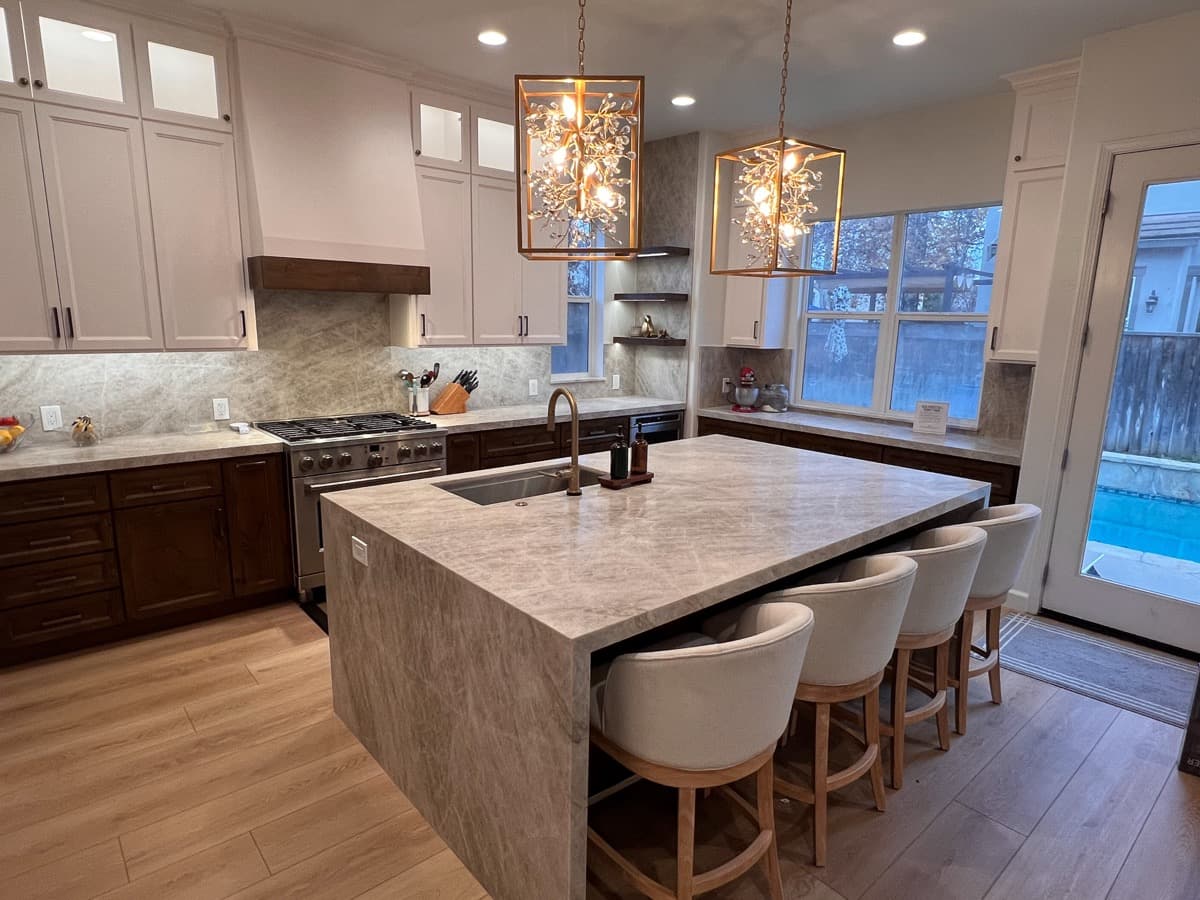
Almost every kitchen we are asked to build comes down, eventually, to one quiet decision: shaker or flat-panel. It sounds like a small choice — a door is a door — but the door is roughly seventy percent of what your eye registers when it walks into a kitchen. Get it right and the room feels inevitable. Get it wrong and the kitchen never quite settles. So it is worth understanding what actually separates these two cabinet doors, beyond the photographs.
What each door actually is
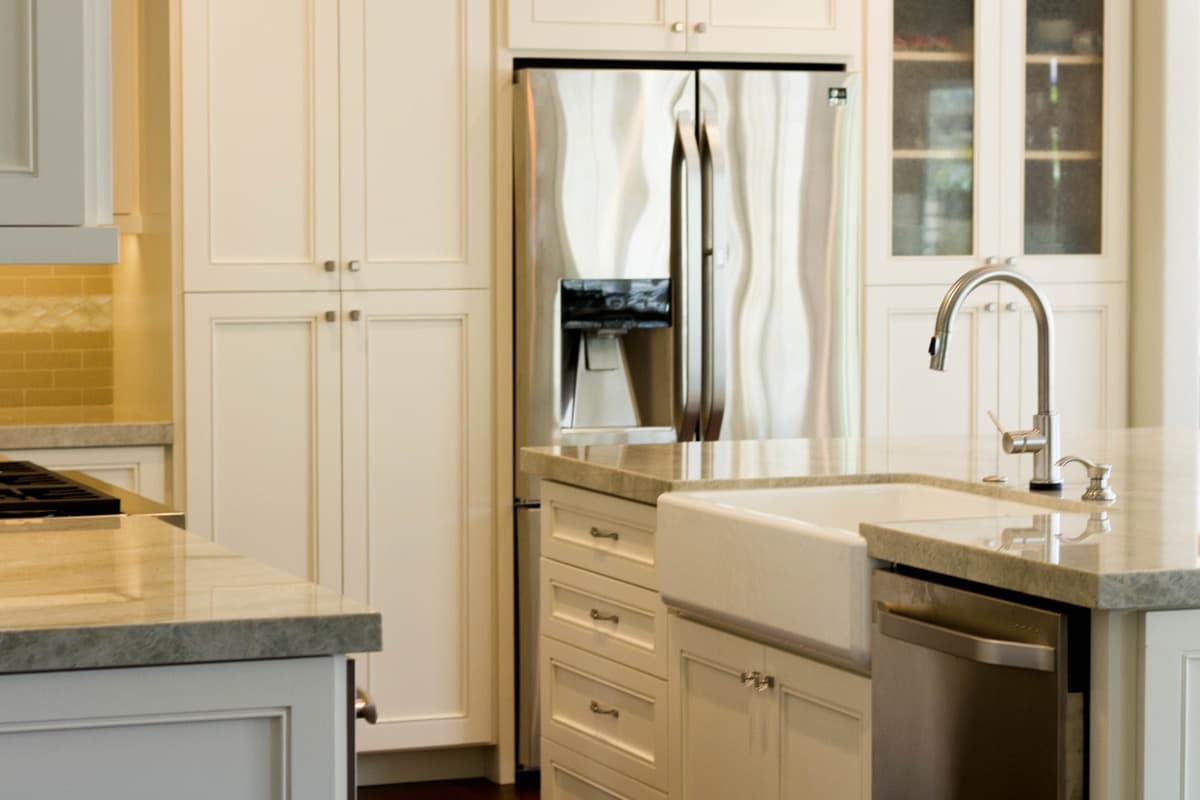
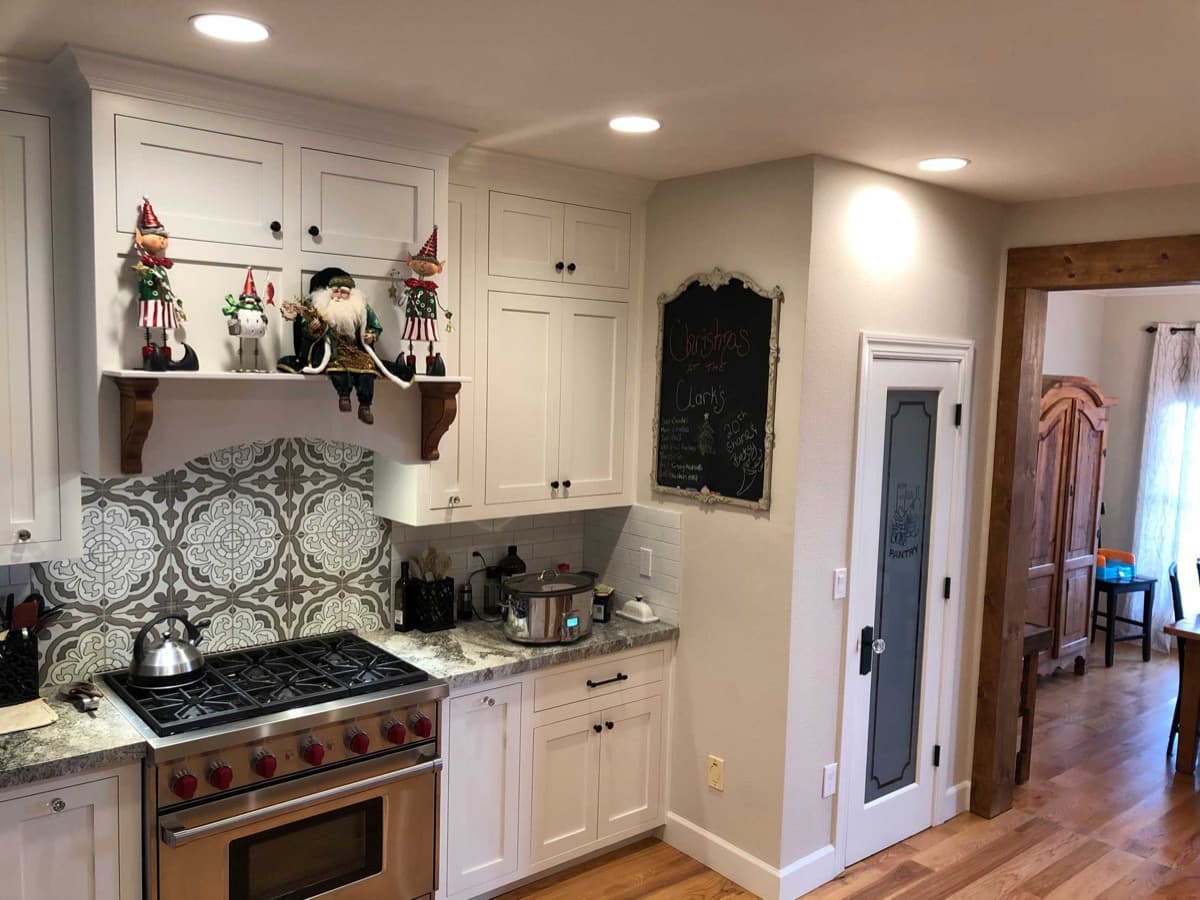
A shaker door is a five-piece door: two vertical stiles, two horizontal rails, and a flat center panel that floats inside a groove cut into that frame. The name traces to the Shaker communities of the 18th and 19th centuries, whose furniture prized function and honest construction over ornament. The recessed panel and the crisp shadow line where it meets the frame are the entire design — nothing applied, nothing carved.
A flat-panel door — also called a slab door — is exactly what it sounds like: a single uninterrupted plane. In a painted kitchen it is usually a sheet of MDF, which holds paint beautifully and will never move with the seasons. In a wood kitchen it is a panel of veneered plywood or solid stock, chosen so the grain runs continuously across the door. No frame, no shadow line, no break in the surface.
The case for shaker
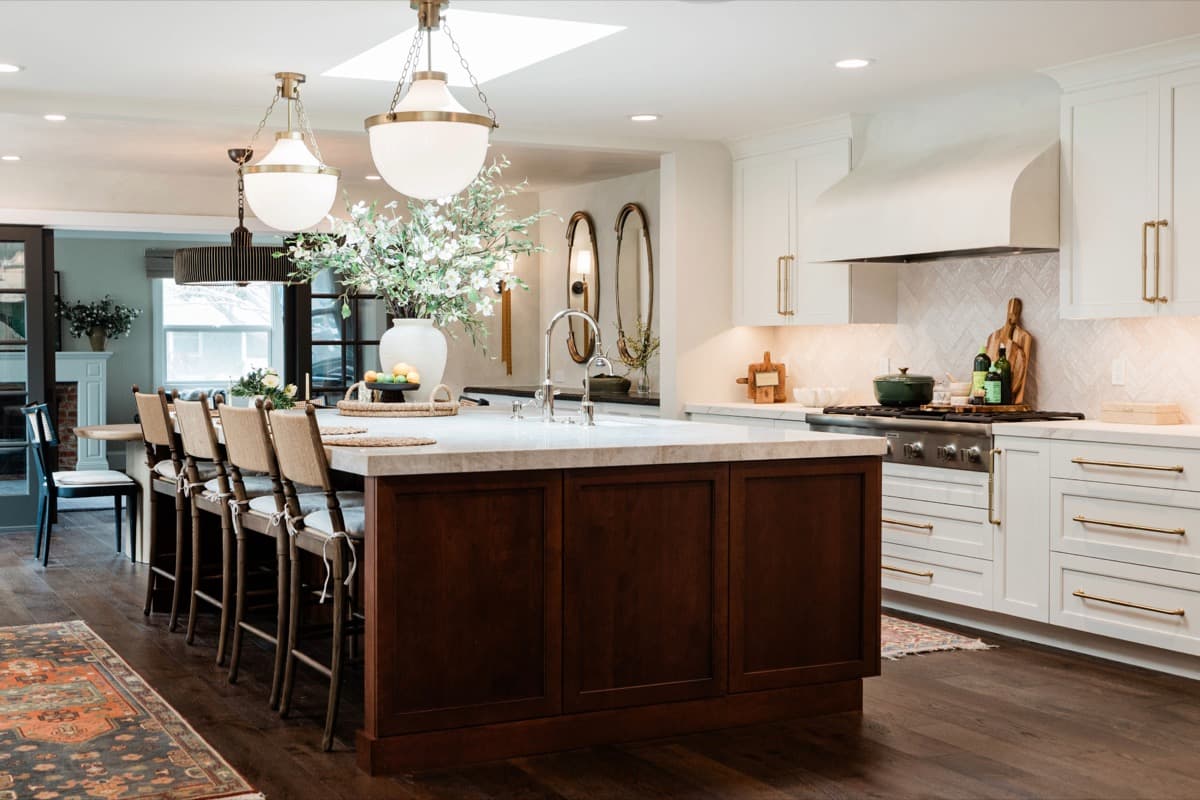
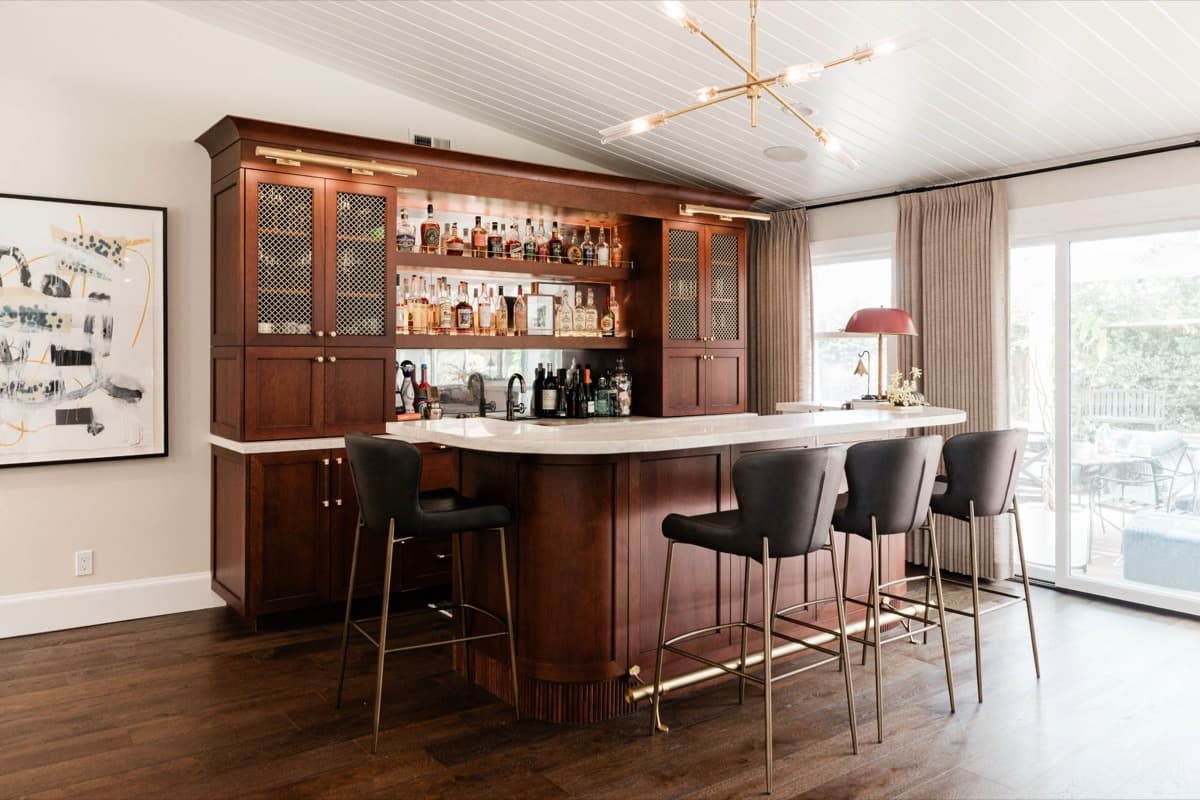
Shaker endures because it refuses to commit to a decade. It is restrained enough to sit comfortably in a 1920s Craftsman bungalow in Willow Glen and clean enough to belong in a new build in Morgan Hill. Painted white or a soft greige, it reads classic; in a deep English green or a warm stained walnut, it reads current. That range is why, when shaker vs. flat-panel cabinets is the question, shaker remains the safer long-term answer for most homeowners.
- Timeless — it has looked correct for two centuries and is unlikely to date.
- Forgiving — the frame creates natural shadow lines that disguise minor wall irregularities and settling.
- Versatile — equally at home painted, stained, two-tone, overlay, or inset.
- Repairable — a damaged panel or rail can be addressed without replacing the whole door.
The honest tradeoffs: a shaker door costs more than a slab because it is five machined pieces rather than one, and the recessed panel ledge collects a thin line of dust and flour that an occasional wipe takes care of. Neither is a real objection — but you should know them going in.
Shaker endures because it refuses to commit to a decade — it looks correct in a 1920s bungalow and a new build alike.
The case for flat-panel
Flat-panel cabinetry is the language of restraint. With no frame to interrupt it, the door becomes a surface — and that surface can do things a shaker door cannot. In a flat-cut walnut or rift-sawn white oak, a wall of slab doors lets the grain run unbroken from one cabinet to the next, so the cabinetry reads as a single piece of timber rather than a row of doors. In a painted finish it delivers the smooth, architectural calm that suits a modern home.
- Clean — an uninterrupted plane that feels architectural and contemporary.
- Easy to maintain — no recessed ledge; a single wipe and the door is done.
- Grain-forward — in a wood species, continuous grain can flow across an entire run.
- Often more affordable — one piece of material, one operation, less labor.
The tradeoffs run the other way. A slab door is less forgiving — any flatness issue or wall irregularity has nowhere to hide. A solid-wood slab can cup or telegraph seasonal movement, which is why we build painted slabs in MDF and wood slabs in stable veneered panels. And stylistically, flat-panel commits more firmly to a contemporary register; it is less likely than shaker to feel at home in a traditional house.
Which one fits your home
The most reliable guide is the architecture you already own. Cabinetry should feel like it grew out of the house, not like it was shipped to it.
Choose shaker if
Your home is a Craftsman, a Spanish Revival, a traditional ranch, a farmhouse, or a transitional new build — the styles that fill Gilroy, Hollister, Saratoga, and the older San Jose neighborhoods. Shaker is also the wiser choice if you expect to sell within five to ten years, because it appeals to the widest set of buyers, and if you simply want a kitchen you will not feel pressed to redo.
Choose flat-panel if
Your home is genuinely modern or mid-century — the clean-lined Eichlers and contemporary builds of Cupertino and the Los Gatos hills — or your taste runs decisively minimal. Flat-panel is also the stronger choice when you want a specific wood species to be the star of the room, since nothing competes with the grain.
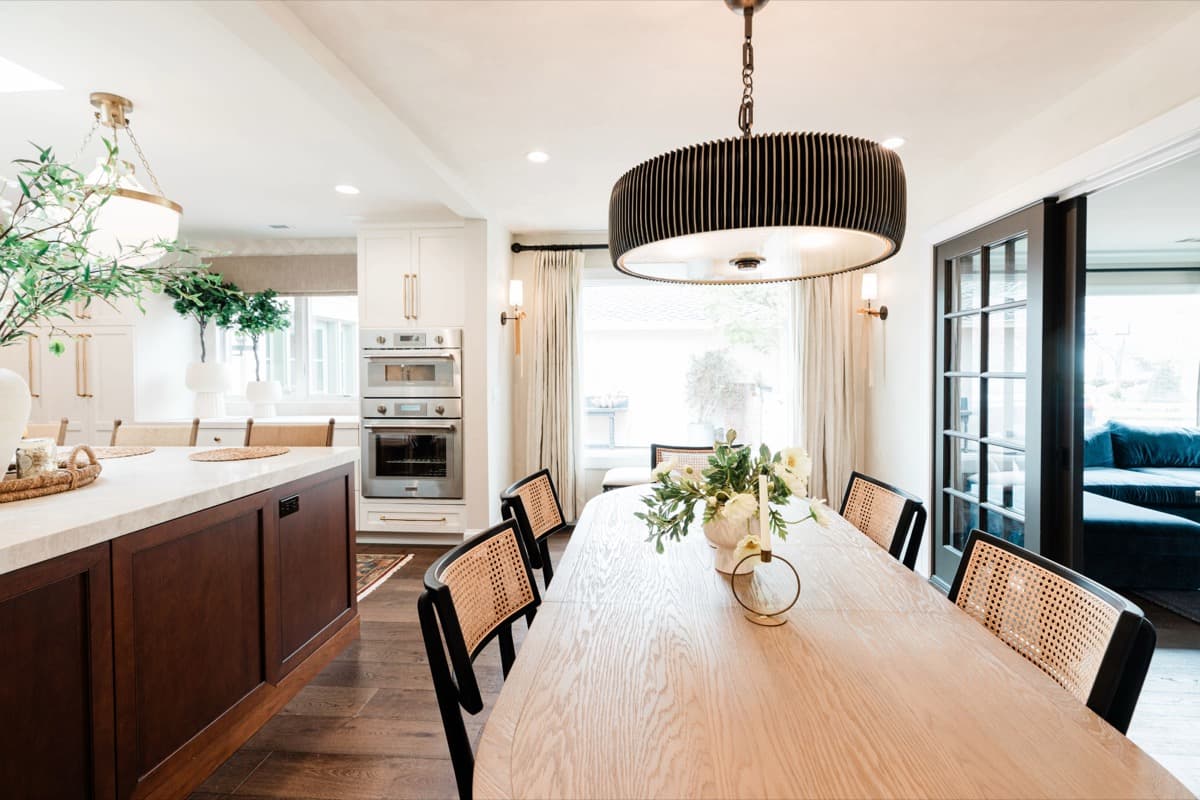
And there is a third path we use often: combine them. A shaker perimeter with a flat-panel island, or shaker base cabinets beneath flat-panel uppers, can give a kitchen both warmth and calm. The two-tone walnut-and-white kitchens we are known for frequently lean on exactly this contrast. The doors are not rivals — they are tools, and a well-designed kitchen knows when to reach for each.
If you are still genuinely torn, default to shaker. It is the more forgiving door, the more flexible door, and the door that has earned the benefit of the doubt over two hundred years. Flat-panel is the right answer when a home or a homeowner asks for it specifically — and when it is right, nothing else will do.
Written by
Kyle Dickson
Kyle Dickson leads Dickson Cabinet Co., the custom cabinet division of D One Builders, building heirloom cabinetry by hand from the shop in Gilroy, California.