Design
Kitchen Cabinet Styles for California Homes (2026)
The directions worth your attention this year — two-tone kitchens, stained walnut, English green, inset doors, integrated appliance panels, and unlacquered brass — and how each one fits the way California homes are actually built.
We are careful with the word trend. A kitchen is a ten-thousand-dollar-and-up decision that you will live with for decades, and chasing a trend into a kitchen is a reliable way to regret one. So treat this less as a list of fashions and more as a report on where good design is genuinely heading — the kitchen cabinet trends for 2026 that are worth your attention precisely because they are not really trends at all. They are quieter, warmer, and more permanent than what came before, and they suit California homes unusually well.
Two-tone kitchens have become the default
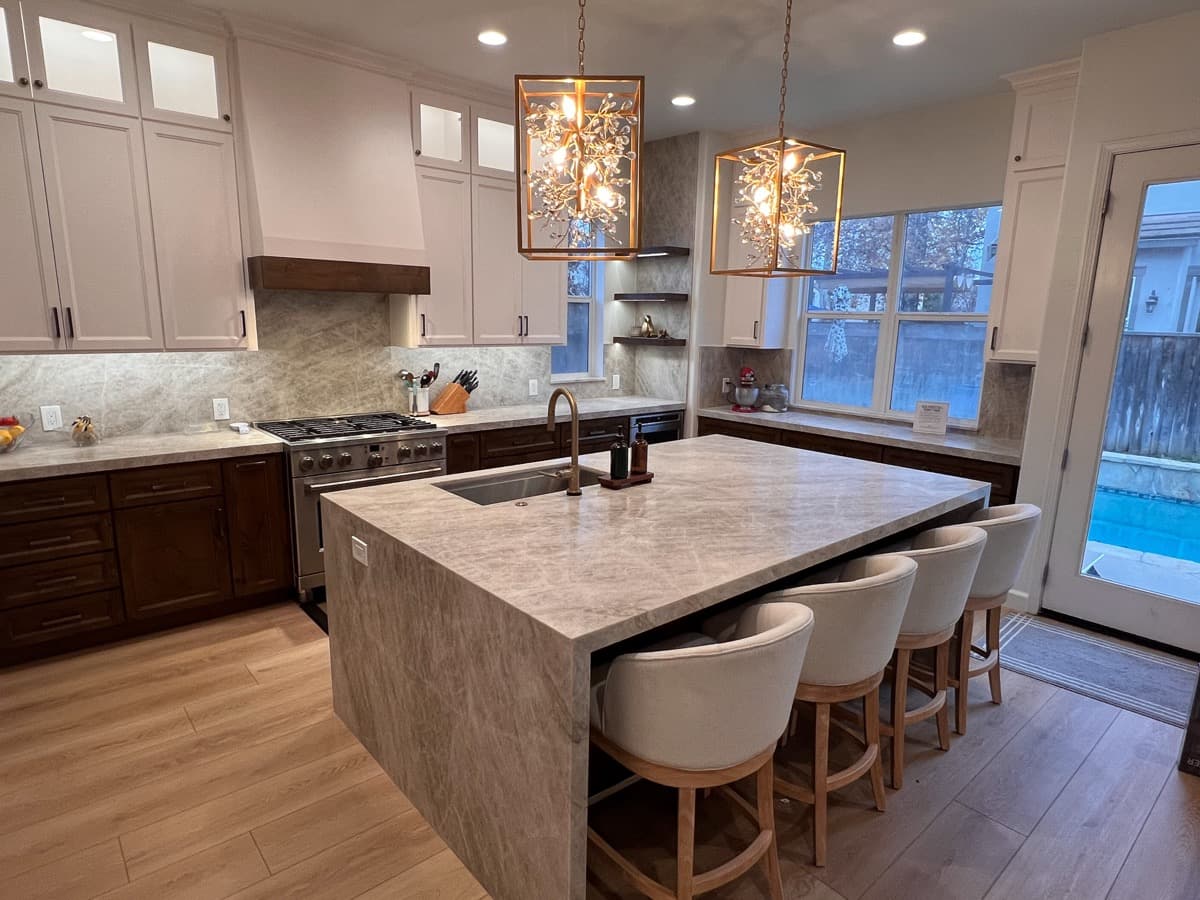
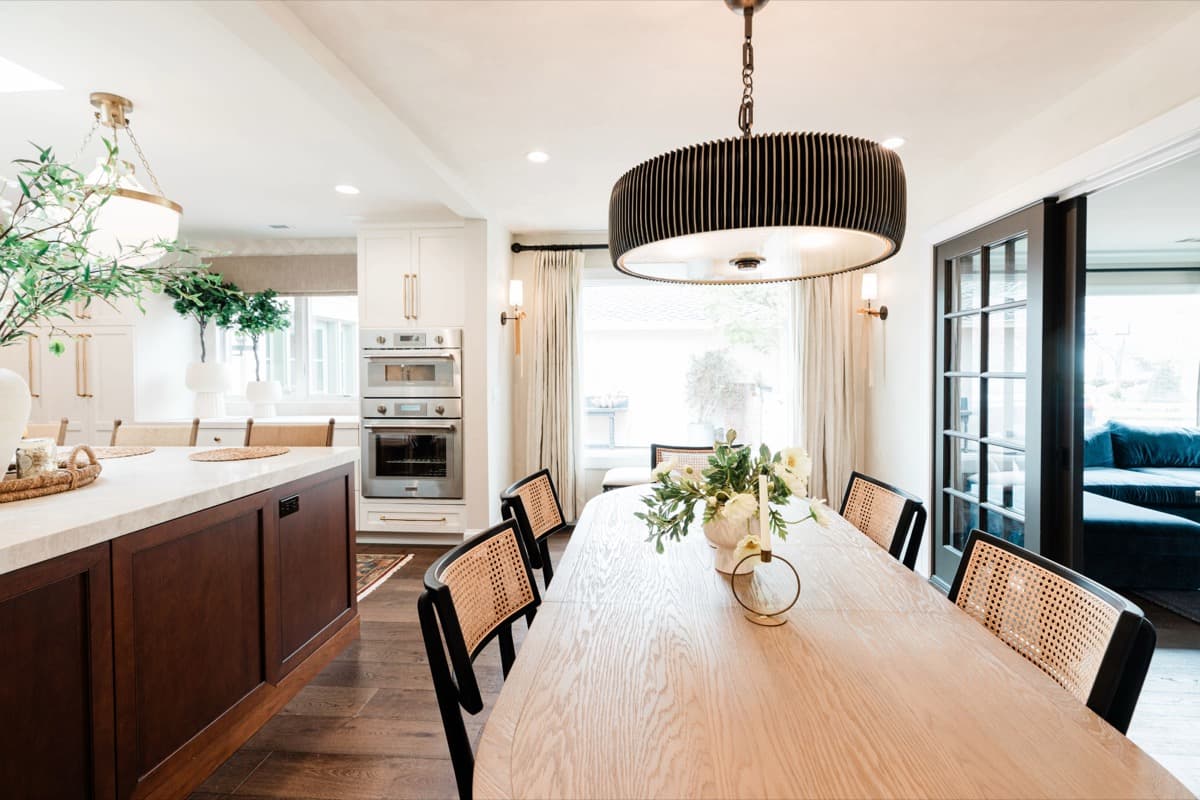
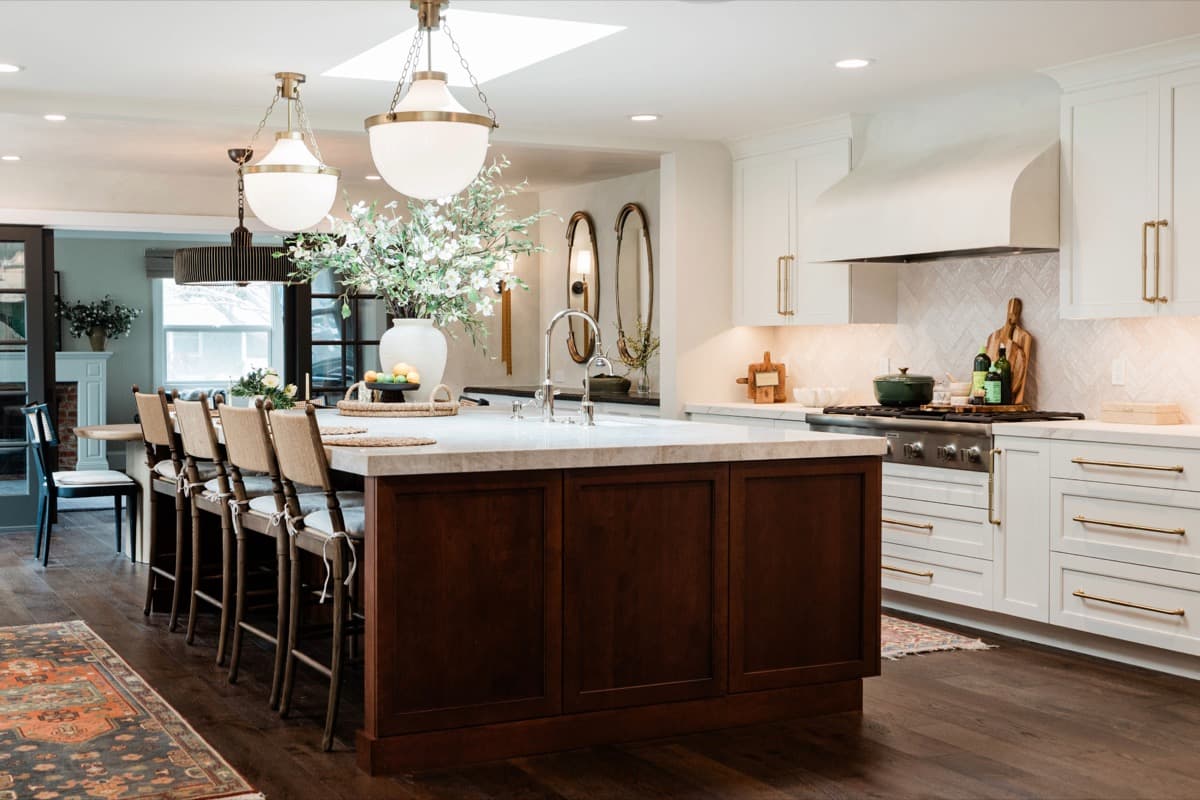
The all-white kitchen has not disappeared, but it has stopped being the automatic answer. In its place: the two-tone kitchen, where the perimeter cabinetry takes one finish and the island takes another. A painted perimeter — soft white, warm cream, pale greige — paired with a stained-wood island is the combination we are asked for most often, and for good reason. It gives a kitchen a focal point, it warms a room that all-white can leave a little cold, and it lets a homeowner be adventurous on the island while staying calm everywhere else.
Two-tone reads as designed rather than decorated, which is why it sits comfortably in the transitional homes that dominate Morgan Hill, Gilroy, and the newer San Jose subdivisions. The key is restraint: two finishes, chosen to relate, not three or four competing for attention.
Stained walnut is the wood of the moment
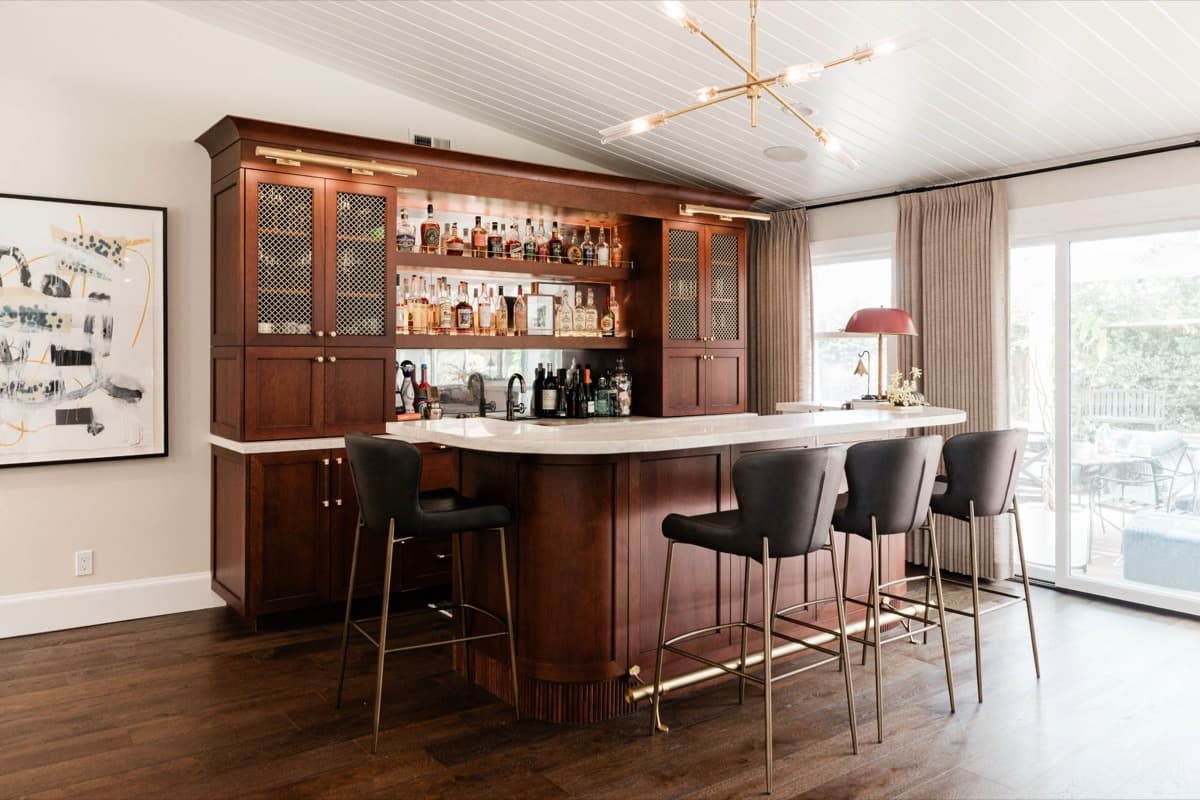
After many years of painted everything, real wood is back — and walnut is leading. Its appeal is the depth of the grain and the warmth of the color, a chocolate-brown with enough variation to feel alive without being busy. We use it for islands, for hood surrounds, for full perimeter runs in the right room, and for the wet bars and built-ins where a piece of furniture is what the space really wants.
Walnut also flatters the California light. Our long, warm afternoons bring out the wood's red and amber undertones in a way that feels generous rather than heavy. White oak — rift-sawn for a quiet, linear grain — is the lighter alternative for homeowners who want wood without the depth of walnut, and it is gaining quickly.
After many years of painted everything, real wood is back — and the California afternoon flatters walnut better than any showroom ever could.
English green and the move past white
When homeowners do choose a painted kitchen now, the color has shifted. Bright white is giving way to deeper, more confident tones — and the standout is English green, a muted, slightly grayed sage-to-forest that behaves almost like a neutral. It is dramatic enough to give a kitchen real character and restrained enough that it will not feel dated in five years. Deep navy, warm clay, and soft mushroom are following the same path. The throughline is saturation with restraint: color that is felt rather than announced.
Green has a particular logic in California. So many of our homes open onto gardens, oaks, and hills, and a green kitchen quietly answers the landscape coming through the windows. It is a color that belongs here.
Inset doors signal real craft
An inset door sits flush within the face frame, in the same plane as the cabinet's face, rather than overlaid on top of it. It is the oldest way to build a cabinet door and still the most demanding, because every door and drawer must be fitted by hand to a consistent reveal — the thin, even gap between door and frame. There is no hiding sloppy work in an inset kitchen.
That difficulty is exactly why inset is having a moment among homeowners who care about craft. It carries the look of fine furniture and of historic cabinetry, and it suits the period homes — the Craftsman, Spanish, and traditional houses of Saratoga, Los Gatos, and old Willow Glen — better than any overlay door can. It costs more, and it should: you are paying for hours of fitting. But in the right house it is unmistakable.
Integrated appliance panels and the disappearing kitchen
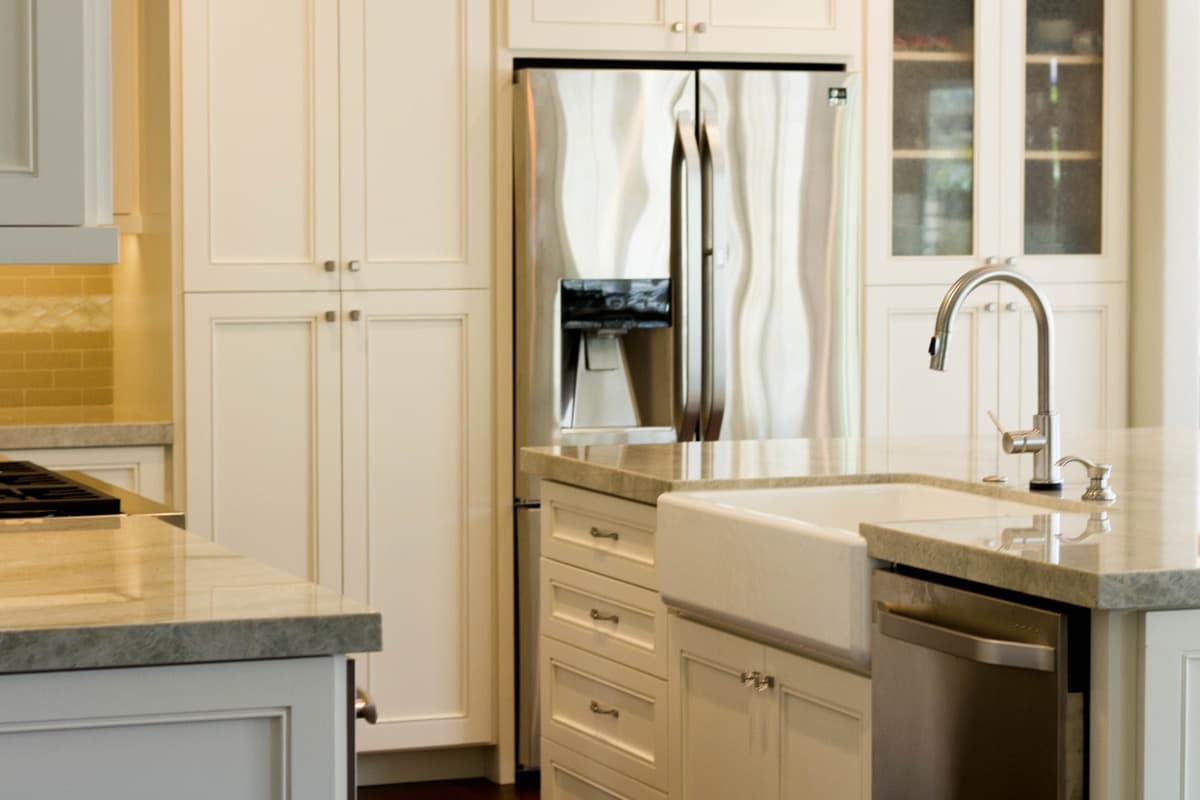
One of the strongest directions in 2026 is toward calm — and nothing disrupts a calm kitchen like a wall of stainless steel. Integrated appliance panels are the answer: the refrigerator, the dishwasher, sometimes the freezer drawers, all faced with cabinet panels that match the surrounding doors so the appliance simply disappears into the millwork.
The result is a kitchen that reads as a room of cabinetry rather than a showroom of machines. It is especially powerful in the open-plan homes so common in California, where the kitchen is visible from the living and dining areas at all times. When the kitchen is always on view, making the appliances quiet is not a luxury — it is the whole point.
Unlacquered brass, allowed to age
Hardware finishes have warmed alongside everything else. Polished chrome and cool nickel have given ground to brass — and increasingly to unlacquered brass, the kind with no protective coating, left to develop a living patina from the touch of hands over the years. It begins bright and gradually deepens to something softer and more antique.
It asks a small philosophical commitment: you have to be comfortable with hardware that changes. Homeowners who want a pull that looks identical in year ten should choose a lacquered or aged brass instead. But for those who like the idea of cabinetry that records its own use, unlacquered brass is one of the most quietly satisfying choices in the kitchen.
How to read a trend wisely
What unites every direction here is permanence. Two-tone, stained walnut, English green, inset doors, integrated panels, aging brass — none of them shout, and none of them are built to be replaced in a few years. That is the real story of 2026: the kitchen is moving away from the disposable and back toward the built-to-last.
Our advice is unchanged regardless of the year. Start from the house — its era, its light, its bones — and let the cabinetry answer it. A trend that genuinely fits your home was never really a trend; it was simply the right decision arriving on schedule. A trend that fits a magazine but not your house will look exactly that way the day after it is installed.
Written by
Kyle Dickson
Kyle Dickson leads Dickson Cabinet Co., the custom cabinet division of D One Builders, building heirloom cabinetry by hand from the shop in Gilroy, California.