Pricing
How Much Do Custom Cabinets Cost in the Bay Area? (2026 Pricing Guide)
An honest, line-by-line look at what custom cabinetry actually costs in Santa Clara and San Benito Counties — what drives the number up, where the money goes, and how custom compares to stock and semi-custom.
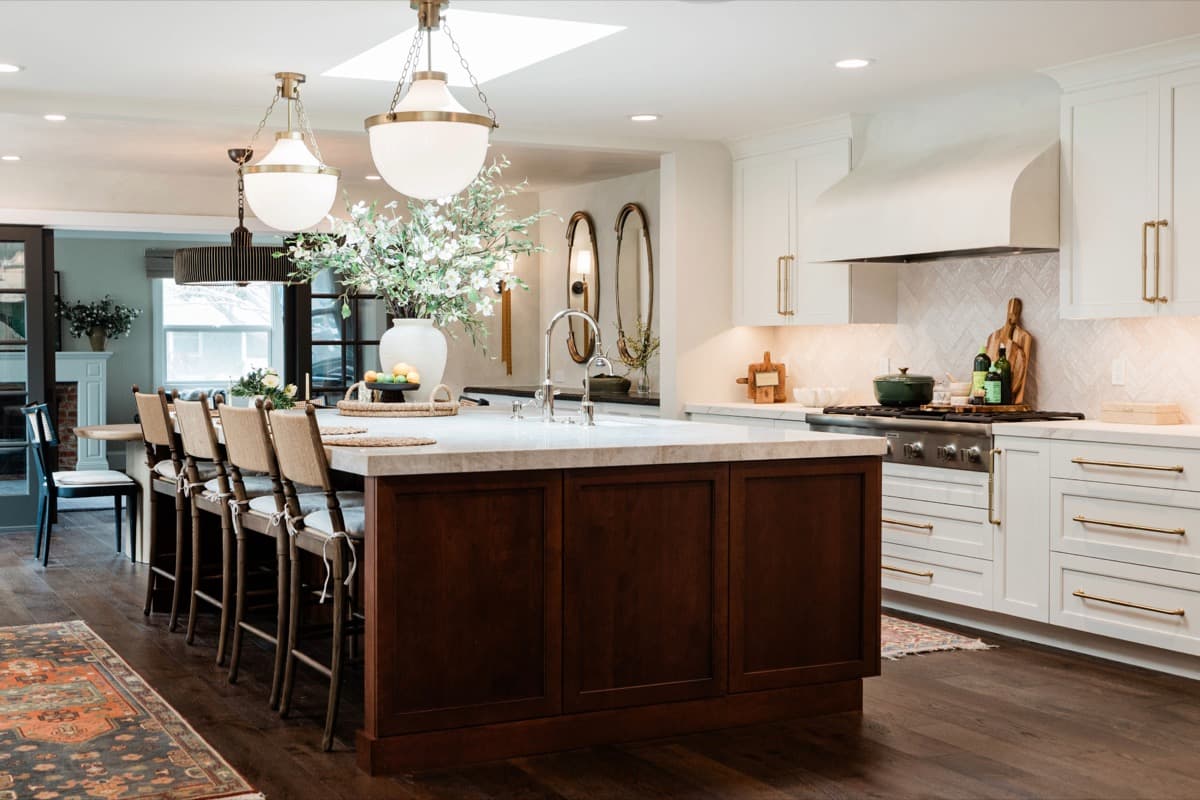
It is the first question almost every homeowner asks, and the one most cabinetmakers are slowest to answer plainly: what will this cost? We understand the hesitation. A kitchen is not a product with a sticker price — it is a set of decisions, and the number moves with every one of them. But vague answers do no one any good. So here is a direct look at what custom cabinets cost in the Bay Area in 2026, where that money actually goes, and how to think about the figure before you ever call a shop.
The honest ranges for 2026
For a true custom kitchen — cabinetry designed for your specific room, built to order, and installed by the people who made it — most projects in Santa Clara and San Benito Counties land between $35,000 and $90,000 for the cabinetry alone. That figure does not include countertops, appliances, plumbing, or tile. It is the boxes, doors, drawers, finish, hardware, and installation.
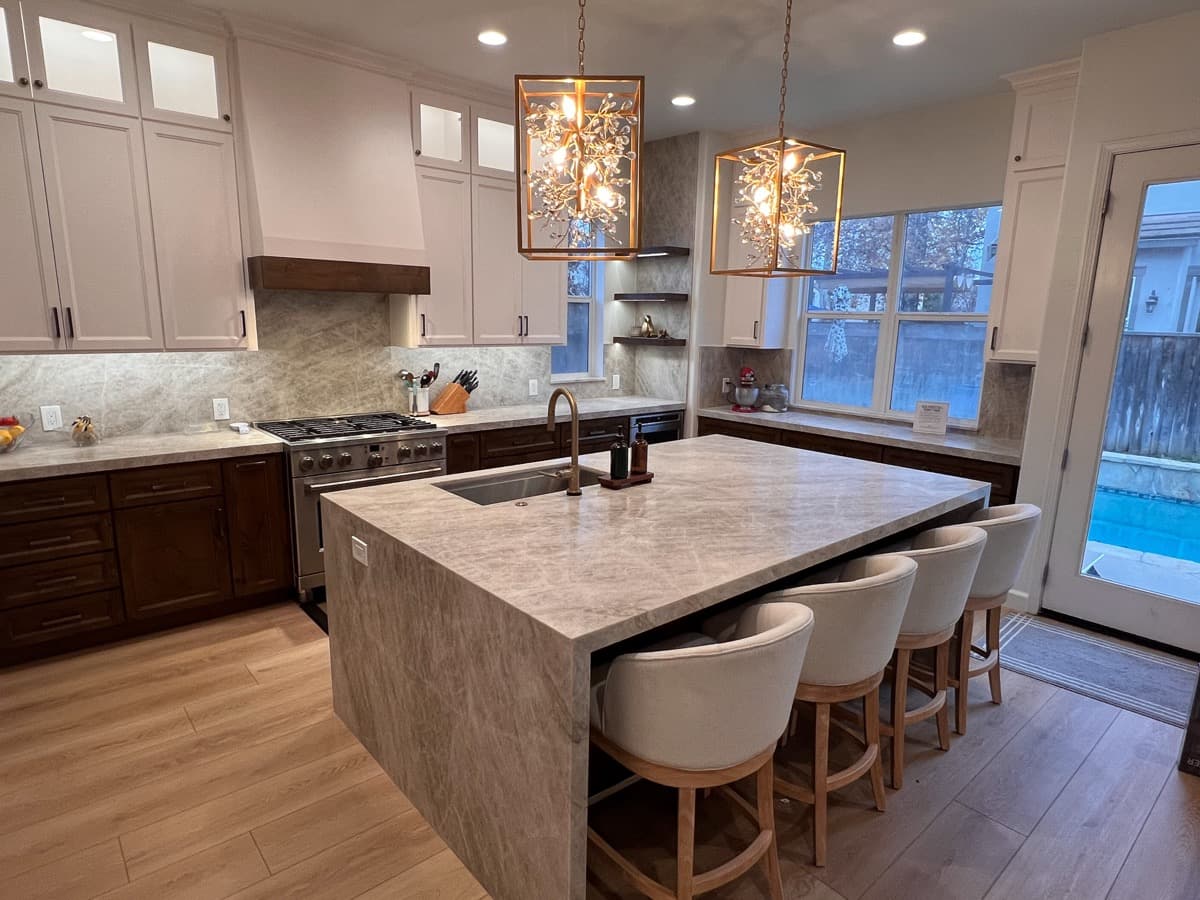
A modest galley or single-wall kitchen with a clean painted shaker door might come in around $35,000 to $45,000. A mid-sized kitchen with an island, a furniture-grade hood surround, and a mix of painted and stained wood typically runs $50,000 to $70,000. A large kitchen with inset doors, specialty species, a butler's pantry, and integrated appliance panels can move past $90,000. These are not numbers we enjoy publishing — they make the phone ring less — but they are accurate, and a homeowner deserves to plan against a real figure rather than a hopeful one.
A kitchen is not a product with a sticker price — it is a set of decisions, and the number moves with every one of them.
If you are searching for what custom cabinets cost in San Jose specifically, expect the upper half of those ranges. Dense urban lots, older homes with out-of-square walls, and the simple economics of operating a finish shop on the Peninsula all push the Bay Area higher than the national average. We will come back to why later.
Where the money actually goes
Cabinetry pricing feels opaque because the cost is buried inside choices that look small on a drawing. Five factors do most of the work. Understanding them lets you steer the budget instead of being surprised by it.
1. Box construction and materials
The cabinet box is the part you never see and the part that decides how long the kitchen lasts. A stock cabinet box is often 1/2-inch particleboard with stapled joints and a thin laminate skin. A custom box from our shop is 3/4-inch plywood — typically a domestic maple or birch veneer core — with dadoed and glued joinery, a full plywood back rather than a hanging rail, and dovetailed solid-wood drawer boxes. That difference is roughly 20 to 30 percent of the cabinet's cost, and it is the single best place your money can go. Plywood holds a screw, resists humidity, and will not sag under a stone countertop a decade in.
2. Door style
Door style is the most visible cost lever. A flat-panel (slab) door is the least expensive to produce — one piece of material, one operation. A five-piece shaker door costs more because it is, literally, five pieces of wood machined, assembled, and sanded. An inset door — set flush within the face frame rather than overlaid on top of it — is the most labor-intensive of all, because every door and drawer must be fitted to a consistent reveal by hand. Moving a whole kitchen from overlay shaker to inset shaker can add 15 to 25 percent.
3. Finish
Finish is where many homeowners are surprised. A painted finish is more expensive than a stained one — counterintuitive, but true. Paint shows every imperfection, so painted doors require more sanding, more primer, and more careful spraying, usually in a conversion varnish or catalyzed lacquer for durability. A two-tone kitchen — painted perimeter, stained island — carries two finish schedules and therefore costs more than either alone. Specialty finishes like glazing, cerusing, or a hand-rubbed oil add another layer of labor on top.
4. Size and complexity
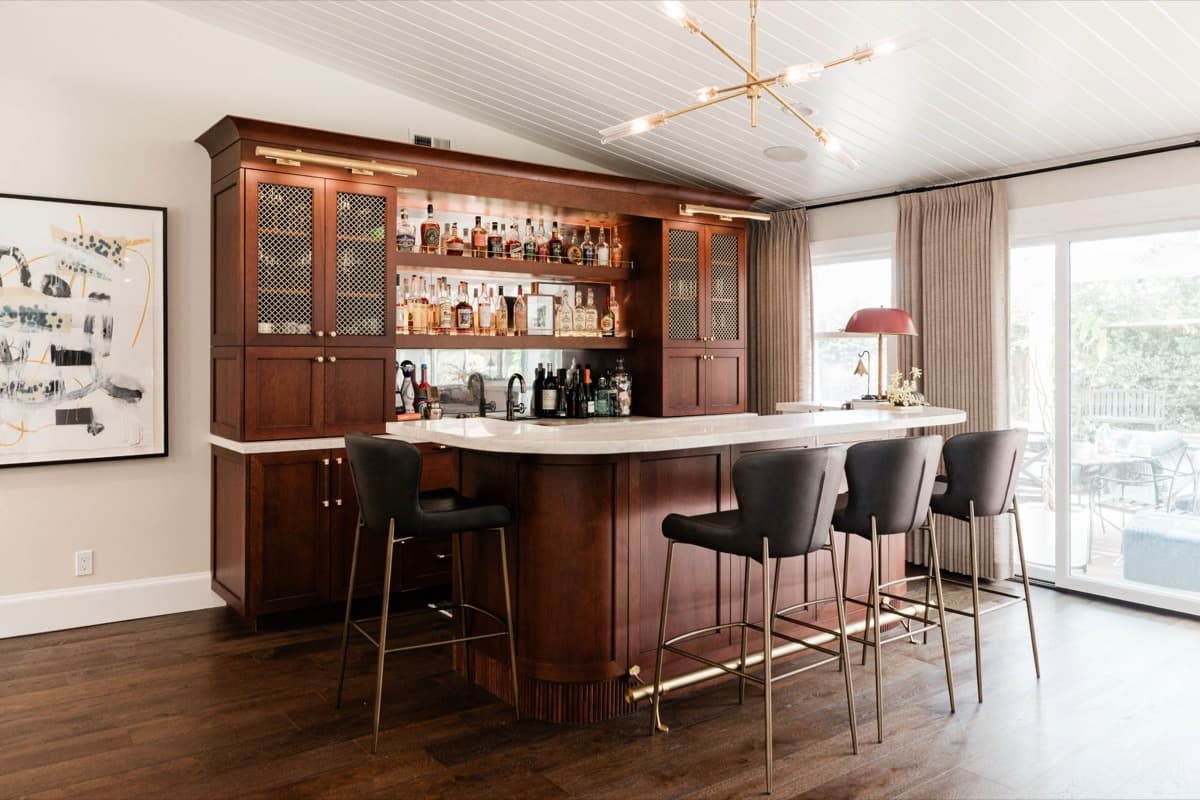
Linear footage is the obvious driver, but complexity matters as much. A run of identical base cabinets is efficient to build. A wall of varied uppers — glass-front display cabinets, a furniture-style hood, open shelving, a plate rack — is a series of one-off problems, each requiring its own drawings and setups. Built-in features such as a window seat, a wet bar, or a floor-to-ceiling pantry are essentially small pieces of furniture and are priced accordingly.
5. Hardware and accessories
Hardware spans an enormous range. Soft-close hinges and undermount drawer slides are standard in any cabinet we build — they should be considered baseline, not an upgrade. But the visible hardware is a genuine variable: a solid unlacquered-brass pull from a quality foundry can cost $25 to $60 per piece, and a kitchen may have forty of them. Interior accessories — pull-out waste bins, spice drawers, tray dividers, a mixer lift — each add real cost. None are required; all are worth pricing deliberately.
Custom vs. semi-custom vs. stock
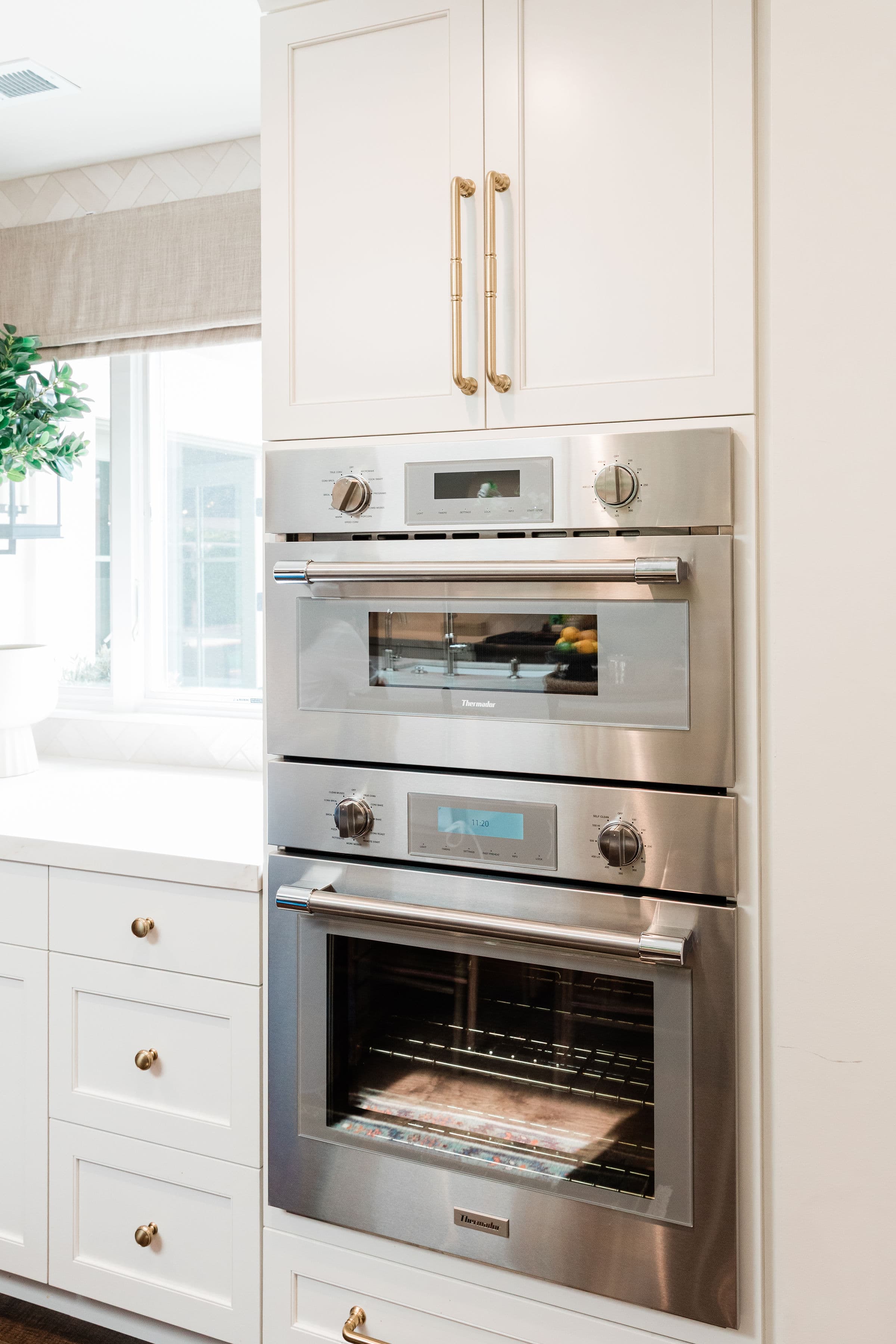
It helps to see the three tiers side by side, because the price gap is real and so is the difference in what you receive.
- Stock cabinets — roughly $4,000 to $12,000 for a kitchen's worth. Pre-built in fixed three-inch increments, sold flat-packed or assembled. Particleboard boxes, limited door and finish options, no ability to fit an irregular room. The right call for a rental or a tight flip.
- Semi-custom cabinets — roughly $12,000 to $30,000. Factory-built but with more sizes, door styles, and finishes, and some modifications available. Better boxes than stock, though still usually particleboard at the entry level. A reasonable middle path when the room is straightforward.
- Custom cabinets — roughly $35,000 to $90,000 and up. Designed for your room, built to order in plywood with real joinery, finished and installed by the shop. Any size, any species, any door, fitted to walls that are never actually square. The right call for a home you intend to keep.
Stock cabinetry is priced to be replaced. Custom cabinetry is priced to be inherited.
The gap between semi-custom and custom is not only quality — it is fit. A semi-custom kitchen is assembled from the closest available sizes, with filler strips covering the gaps. A custom kitchen has no fillers because every cabinet was drawn to the wall it sits against. In an older Willow Glen or Los Gatos home where nothing is plumb, that distinction is the difference between a kitchen that looks built-in and one that looks installed.
Why the Bay Area runs higher
Homeowners often arrive with a number they read in a national remodeling survey and are startled when local quotes exceed it. The reasons are structural, not opportunistic. Skilled finish carpenters and cabinetmakers command Bay Area wages, and a custom shop is labor before it is anything else. Shop space on the Peninsula is genuinely expensive. Lumber and quality hardware cost the same here as elsewhere, but everything around them — rent, insurance, wages, the cost of simply keeping a finishing room running — reflects where we work.
There is also the housing stock itself. Many of the homes we work in were built between the 1920s and the 1970s. Walls bow, floors slope, corners open past ninety degrees. Custom cabinetry absorbs all of that — it is scribed and fitted on site — but absorbing it takes time, and time is the cost. A new-construction tract home is faster to cabinet than a 1955 ranch in Cupertino, and the price follows.
How to get an accurate number
A trustworthy cabinetmaker will not quote a real price from a phone call. The number depends on measurements, on the door and finish you choose, and on how the room is actually built. What we can do early is give you an honest range for the kind of project you are describing, walk the space, and then produce a fixed proposal once the design is settled. A fixed proposal — not a range that drifts upward through the build — is something every homeowner should insist on.
If you take one idea from this guide, let it be this: decide what you are buying before you compare prices. A $22,000 semi-custom kitchen and a $58,000 custom kitchen are not the same thing quoted two ways — they are different objects with different lifespans. Once you know which one you want, the right number is far easier to plan for, and far less likely to surprise you.
Written by
Kyle Dickson
Kyle Dickson leads Dickson Cabinet Co., the custom cabinet division of D One Builders, building heirloom cabinetry by hand from the shop in Gilroy, California.