Buying Guide
Custom vs. Stock vs. Semi-Custom Cabinets: The Real Difference
Three tiers of cabinetry, three very different objects. A frank breakdown of construction, joinery, materials, and lifespan — and a clear sense of when each one actually makes sense.
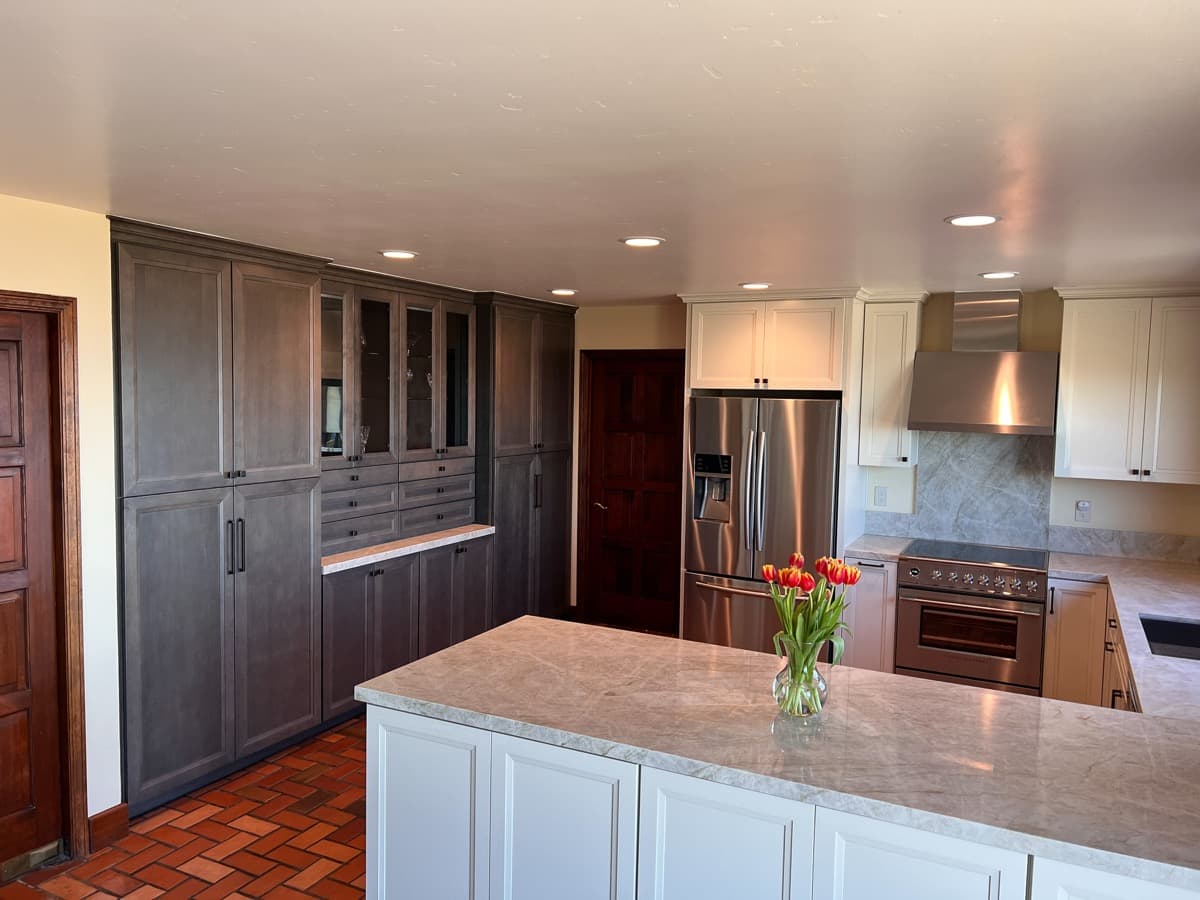
The phrase kitchen cabinets describes three genuinely different products that happen to share a name. Stock, semi-custom, and custom cabinets are not three price points on one ladder — they are three distinct ways of making a box, and the differences sit mostly in places a showroom display will never show you. If you are weighing custom vs. stock kitchen cabinets, the most useful thing we can do is open the doors and tell you what is actually inside.
Stock cabinets
Stock cabinets are mass-produced in fixed sizes — almost always in three-inch increments — and held in inventory ready to ship. You are choosing from a catalog of widths and a short list of door styles and finishes, and the room is then assembled from whatever combination comes closest. Wherever the closest size leaves a gap, a filler strip covers it.
The boxes are typically 1/2-inch particleboard or thin MDF with a melamine or thermofoil surface. Joints are usually stapled and may rely on cam-lock fasteners. The cabinet back is often a thin panel or a pair of hanging rails rather than a full structural back. Drawer boxes are frequently the same particleboard, assembled with staples, riding on basic slides. Stock cabinetry is engineered to a price, and the price is the point.
That is not a condemnation. Stock cabinets are the sensible choice for a rental property, a quick flip, a garage, or a laundry room — anywhere the calculus is cost and speed rather than longevity. A homeowner should simply go in clear-eyed: this is cabinetry with a service life measured in years, not generations.
Semi-custom cabinets
Semi-custom cabinets are still factory-built, but the factory gives you more room to maneuver. You get a wider menu of door styles and finishes, more size options, and a set of permitted modifications — a cabinet made deeper, a door style applied to a specialty piece, an upgraded interior. Some lines offer plywood box construction as an upgrade, which is worth taking.
Semi-custom is a reasonable middle path, and for a straightforward room it can be a smart one. But it is important to understand the limits. The cabinets are still built from a parametric system, so they still arrive in standardized increments, and they still need fillers to meet the walls. The construction quality varies widely line to line — some semi-custom is genuinely well-built, some is stock cabinetry with a longer order form. The label alone tells you less than you would hope.
Custom cabinets
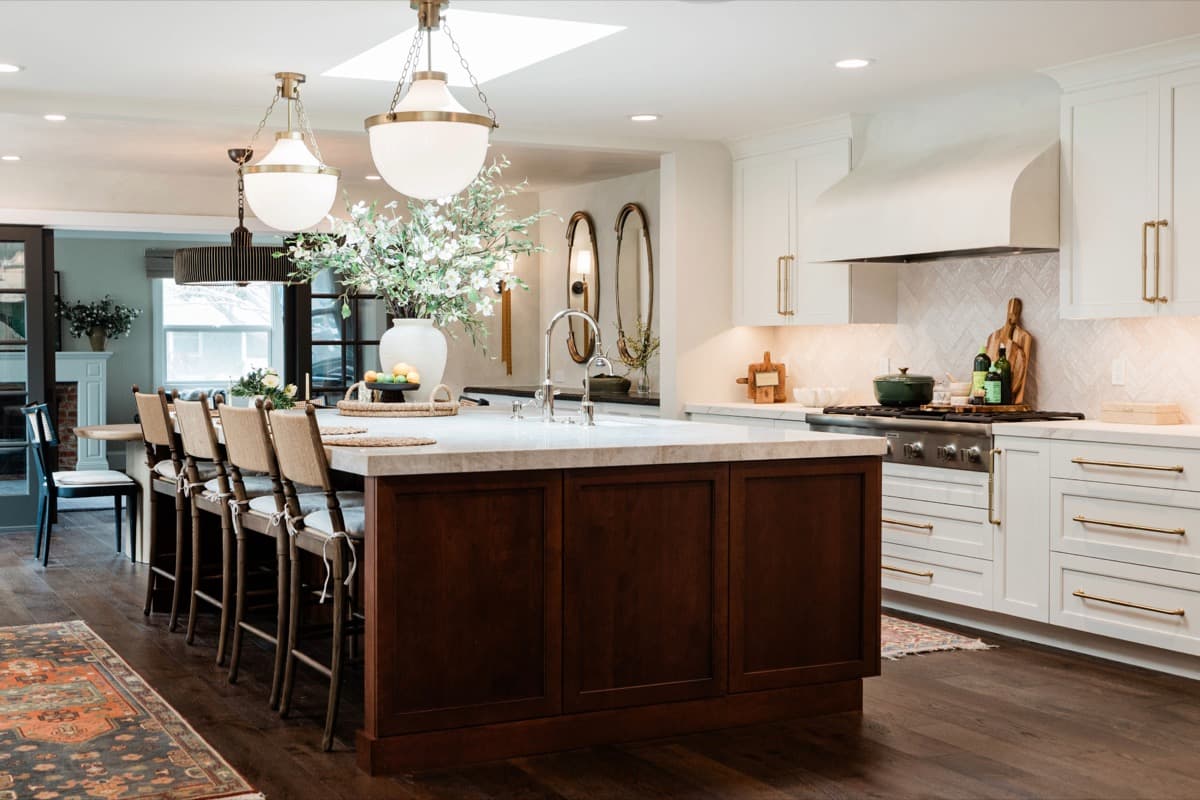
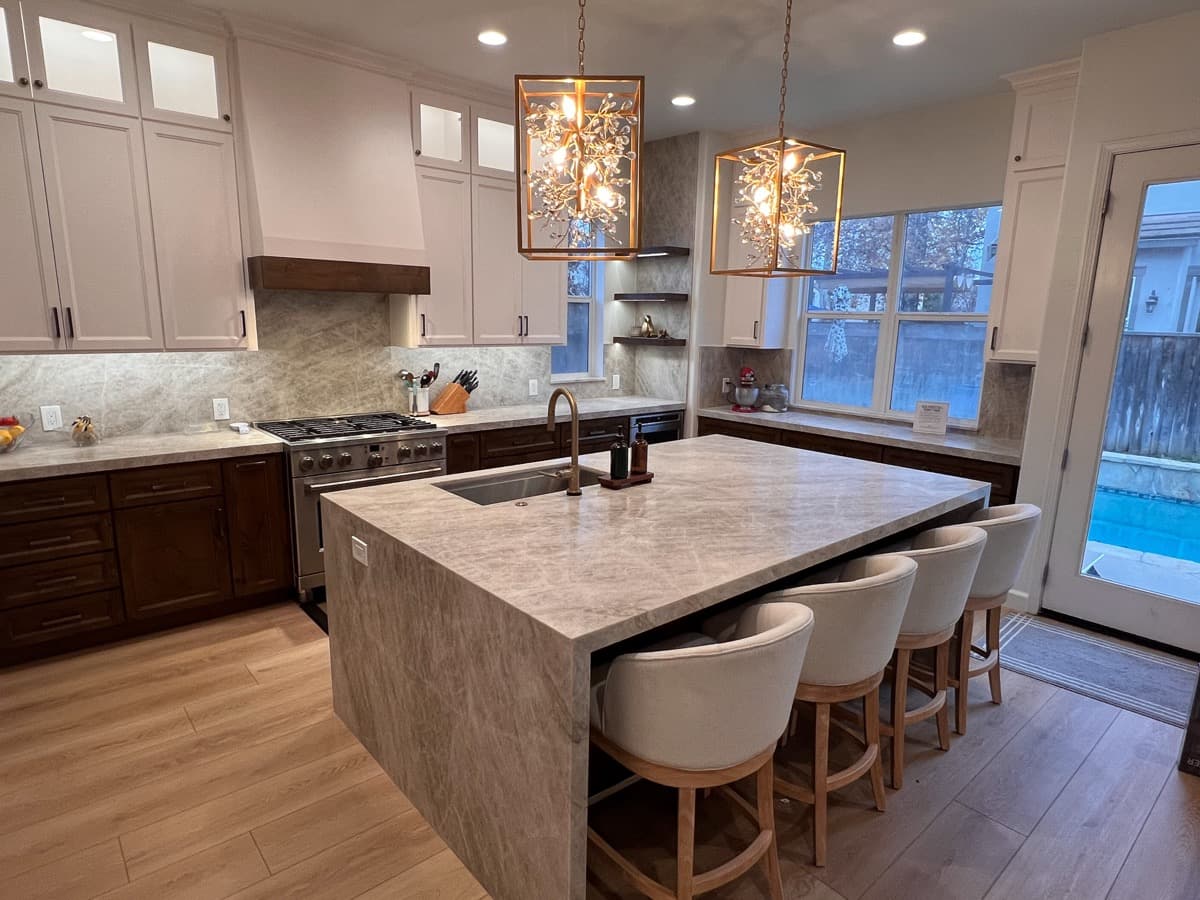
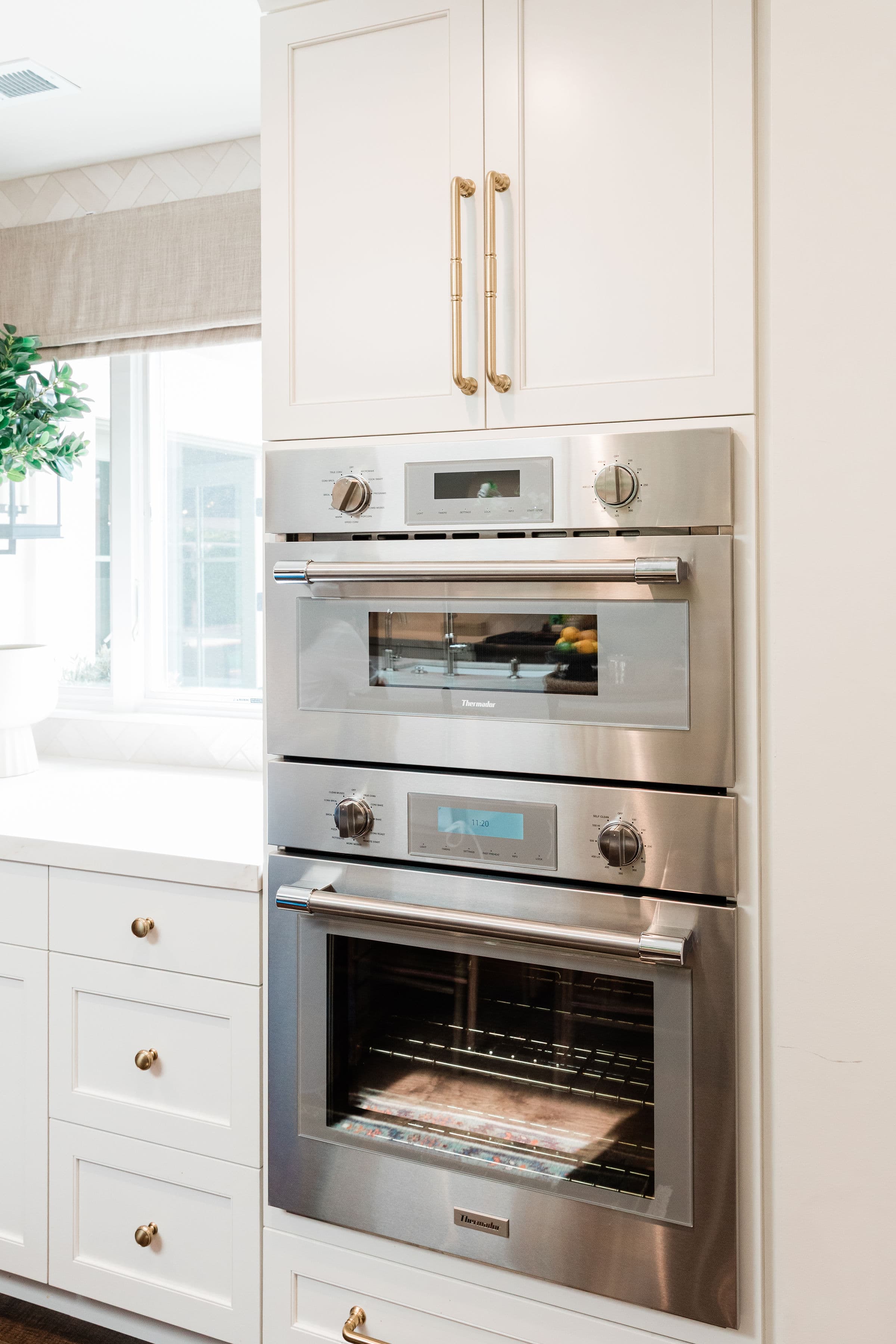
Custom cabinets are not selected — they are drawn. Every cabinet is designed for the specific room it will live in, then built to order. There is no catalog of sizes because there are no fixed sizes; a cabinet is whatever dimension the wall in front of it requires. There are no fillers because every cabinet already meets its neighbor and the wall exactly. And there is no limit on species, door style, finish, or configuration, because nothing is being pulled from a system.
Custom cabinets are not selected — they are drawn. A cabinet is whatever dimension the wall in front of it requires.
In our shop, a custom box is 3/4-inch plywood with a hardwood veneer face, joined with glued dado construction and a full plywood back that makes the cabinet rigid enough to carry a stone countertop without complaint. Drawer boxes are solid hardwood, dovetailed at the corners, running on full-extension undermount slides with soft-close as standard. Face frames, where used, are solid wood. The finish is sprayed in a controlled room in a catalyzed lacquer or conversion varnish, then cured before the cabinetry ever leaves the building.
The differences that actually matter
Joinery and box construction
This is the heart of it. A stapled particleboard box relies on fasteners to hold its shape, and fasteners loosen — particleboard does not hold a screw the way wood does, and once a joint works loose it cannot really be re-tightened. A glued, dadoed plywood box is a piece of joinery: the wood itself carries the load, and the cabinet stays square for decades. Dovetailed solid-wood drawers are the same principle in miniature. None of this is visible in a showroom, and all of it decides how the kitchen ages.
Materials and moisture
Particleboard and water are enemies. A dishwasher leak, a slow drip under a sink, even sustained humidity will cause a particleboard box to swell and crumble, and swelling is permanent. Plywood tolerates the same conditions far better — it can be dried out and will usually recover. In a kitchen, which is the most moisture-prone room in the house, the box material is not a detail. It is the warranty.
Fit
Stock and semi-custom cabinetry is installed against your walls. Custom cabinetry is fitted to them — scribed, shimmed, and trimmed so that the cabinet follows a bowed wall or a sloping floor and still presents a clean, level face. In the older homes across San Jose, Los Gatos, and Saratoga, where a century of settling has left almost no surface truly square, fit is the single most visible mark of custom work.
Longevity
A well-built custom kitchen is a thirty-to-fifty-year object, and often longer — the finish may be refreshed once in that span, but the boxes, the joinery, and the drawers simply keep working. Stock cabinetry generally has a useful life of ten to fifteen years before the boxes loosen, the hinges fail, or the surfaces delaminate. Semi-custom sits between the two, closer to whichever end its construction was built toward.
When each one makes sense
- Choose stock when budget and speed govern the decision and longevity does not — a rental, a flip, a utility space, a garage workbench.
- Choose semi-custom when the room is simple, square, and conventionally sized, and you want a step up in options without the cost of bespoke work. Insist on plywood boxes if the line offers them.
- Choose custom when the home is one you intend to keep, when the room is irregular or unusually shaped, when you want a specific species or finish, or when the cabinetry itself is meant to be the architecture of the room rather than its background.
There is no universally correct tier — there is only the right tier for a given house and a given plan. What we would ask of any homeowner is simply this: know which of the three you are actually buying. The disappointment we see most often is not someone who chose stock on purpose. It is someone who paid for what they believed was custom and received a semi-custom box with a longer order form. Open the doors. Look at the joinery. The truth of a cabinet is always on the inside.
Written by
Kyle Dickson
Kyle Dickson leads Dickson Cabinet Co., the custom cabinet division of D One Builders, building heirloom cabinetry by hand from the shop in Gilroy, California.